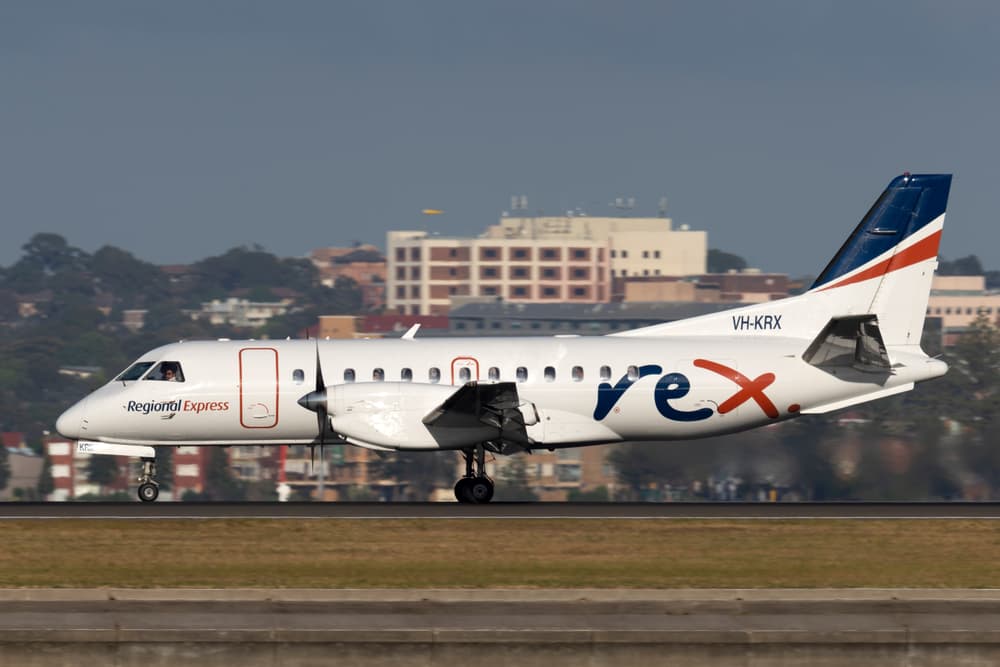
Regional airline Rex is looking to expand their domestic services starting from earlier next year.
The move comes after controversy surrounding Rex’s substantial government bailout as the federal government scrambles to provide support for the aviation sector during the Coronavirus pandemic.
The small airline received more money from the Morrison government than Qantas and Virgin Australia combined.
Catherine King, transport spokeswoman for the opposition, described the handout from the Morrison government as “looking after their National Party mates”, referencing John Sharp, a former Nationals MP, federal transport minister and current Rex deputy chairman.
Rex is now indicating their intention to fly between Australia’s five biggest capitals: Sydney, Melbourne, Brisbane, Adelaide and Perth, launching from early 2021.
As domestic and international airlines struggle, Rex is looking to raise $200 million to fund the expansion. Rex is planning on leasing 10 new jets for the expansion, including narrow-bodied jets such as Boeing 737s and Airbus A320s.
Deputy Chairman John Sharp told The Australian Financial Review that the airline will also seek to hire new pilots, cabin crew and ground staff, adding to the 1150 employees currently employed by Rex. While there is no word yet on how many new jobs Rex’s expansion will create, the jobs will surely be welcomed by the Australian aviation industry.
This expansion would allow Rex to compete with major airlines, Qantas, Jetstar and Virgin Australia which went into voluntary administration in April 2020.
The regional airline is already in discussions with a number of private equity and investment companies, with the sale of shares expected to fund the leasing of the new jets.
The capital investment required for Rex to undertake this ambitious expansion is expected to be finalised by June.