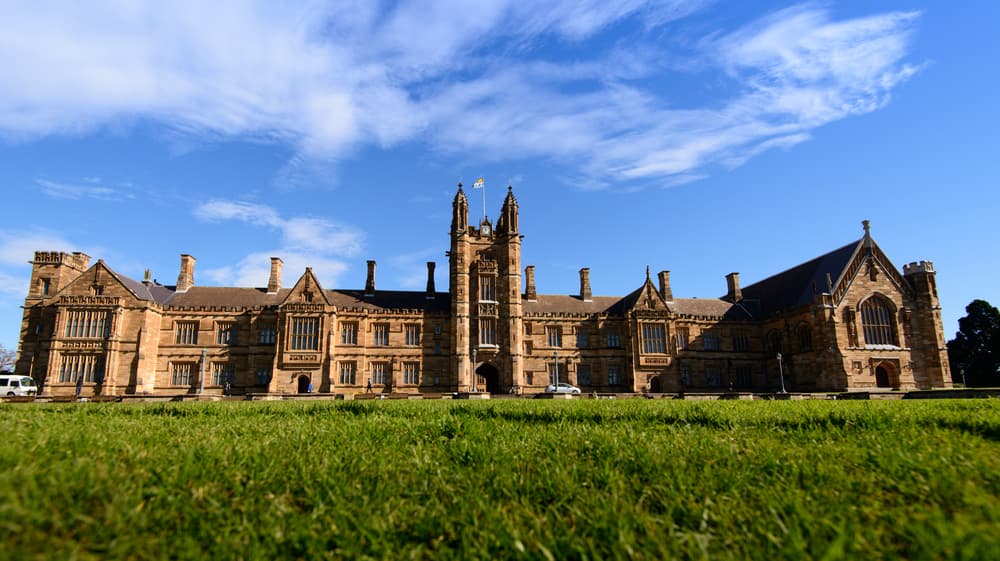
According to the The Times Higher Education university rankings that were released today, six Australian universities have been ranked among the best 100 in the world.
The University of Melbourne was once again the country’s highest ranking university, with it jumping eight places since 2015 to equal 33rd. Next was the Australian National University ranked at 47th, the University of Queensland and the University of Sydney (both equal 60th), the Monash University at 74th and the University of NSW at 78th.
Many of these institutions improved upon last year’s rankings, and Australia even took out 23 spots in the top 400 universities worldwide.
However, Phil Baty, editor of the Times Higher Education World University Rankings said Australia’s success can’t be guaranteed in the long-term, as more of Asia’s leading universities have joined the top of the list each year.
“Australia will have to watch out for Asia’s continuing ascent,” he said. “The higher education superpower has two new entries in the top 100 and a further four institutions joining the top 200.”
For the first time in the rankings’ history, the UK’s University of Oxford was awarded with the top spot. The USA’s California Institute of Technology was bumped down to number two for the first time in six years – followed closely by Stanford University.
According to the Times Higher Education, these are the top 11 institutions in the world:
- University of Oxford
- California Institute of Technology
- Stanford University
- University of Cambridge
- Massachusetts Institute of Technology
- Harvard University
- Princeton University
- Imperial College London
- ETH Zurich – Swiss Federal Institute of Technology Zurich
- University of California, Berkeley (tie)
- University of Chicago (tie)
This ranking system works by relying on surveys completed by academics. It also takes into account the teaching quality of the institutions by analysing factors, such as the number of bachelor students compared to doctorate students.