Business NewsSign up for our newsletter to stay up to date
Colour Change Wristbands Can Measure Over-Exposure to UV Rays
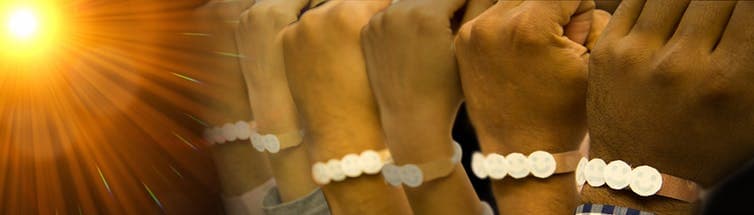
RMIT researchers have developed a new wristband that can indicate a person’s exposure to harmful UV rays. The wristbands differ for people of different skin tones, and will also assist people suffering from vitamin D deficiencies.
Previously, the only way to measure UV exposure was through the UV Index measured by the Australian Radiation Protection and Nuclear Safety Agency (ARPANSA). But on a personal level, the index does not inform people about how much or how little exposure they need, or if they have had too much exposure. Now, the wristbands gauge how much UV people are exposed to, and when it becomes harmful, based on the wearers specific skin tone.
“If the first smiley lights up that’s 25 percent (of a daily vitamin D dose), if the third one lights up that’s 75 percent of the dose and finally if the frowning face lights up it tells you enough is enough, leave the sun now,” Professor Vipul Bansal told 9 News.
“This could potentially reduce the rate of skin cancer in Australia.”
Melanoma is currently the 4th most commonly diagnosed cancer in Australia. It’s been estimated by the Australian government that over 14,000 people have died from skin cancer so far in 2018. Of these people, 1900 have died from skin cancer related issues. Australians have a 91% chance of surviving skin cancer for five years, however it is hoped that this new technology will reduce the diagnosis numbers.
While the prototype is still in its development stages, and has been for to years, it is hoped that the product will make its way to Australian stores in the coming months.