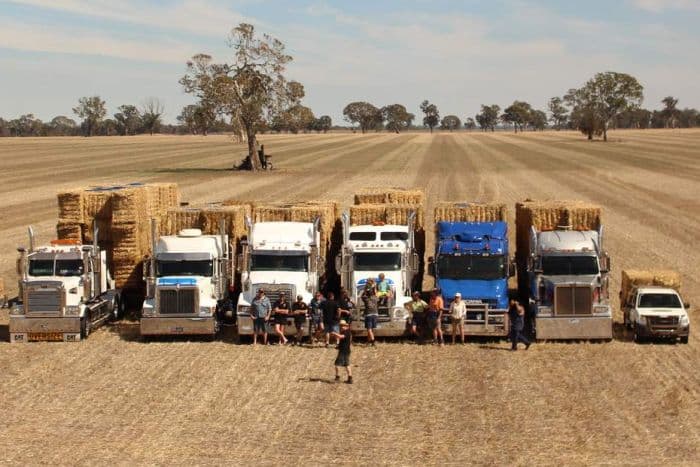
Hay exports to Japan and China are continuing despite farmers’ pleas for the government to call the drought a state of emergency. 600,000 tonnes of hay are currently awaiting exportation to the Asian countries, with farmers calling the state and the federal government to action to seize the hay.
Demand for fodder has increased in Australia as a result of the drought as farmers have become desperate to feed their livestock. Chair of the Australian Fodder Industry Association, Frank McRae, says that Australian growers are more desperate than they have been.
“We’re in survival mode at the moment,” Mcrae told the ABC.
“You have to go back to 1981–1982 to see a drought this widespread and so severe.”
Farmers are struggling to keep up with the demand from domestic and international customers. Prices have subsequently increased as the shortage grows, with some bales selling at $400 and $500 per tonne.
The industry earns Australia around $400 million every year, so closing off exportations would cause significant financial losses. It is up to the government to decide whether it is worth the loss to stop exportations temporarily, to save the farmers.
If exportations continue during the drought, farmers predict that we could see the end of the industry in the next 6 to 12 months.