Business NewsSign up for our newsletter to stay up to date
DJI Enters “New Era of Digital Photography” with Launch of New Drones
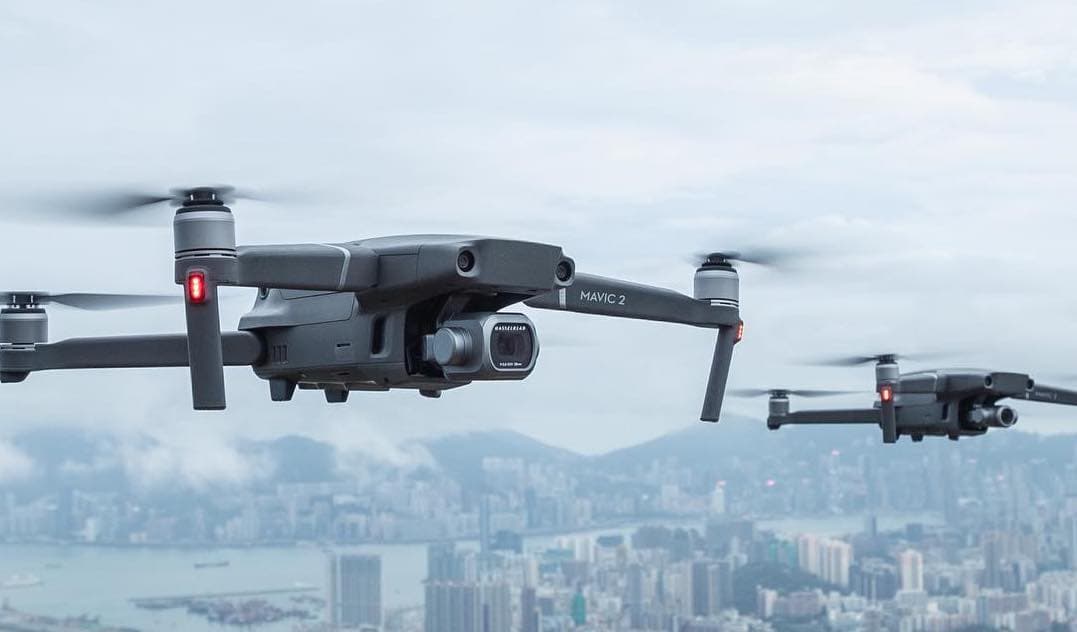
World leader in civilian drones and aerial imaging, DJI, have announced the release of their new camera drones: Mavic 2 Pro and Mavic 2 Zoom. The devices are additions to their already-iconic Mavic series, and are set to revolutionise digital imaging and photography.
DJI President Roger Luo launched the drones this week, and said in a statement that the products signify a new age in digital cinematography and videography.
“The Mavic 2 Pro and Mavic 2 Zoom will enable photographers and videographers to take their inspirations to the air quickly and elevate their creative ideas to new heights.”
The Mavic 2 series holds the most advanced drones to date. DJI have worked in partnership with photography giant Hasselblad to create a world first: a drone with a Hasselblad camera with high-caliber colour and light performance. The aerodynamic design reduces drag by up to 19%, enhancing movement and agility. The Mavic 2 series aircrafts can fly up to 72 km/h with a maximum flight time of approximately 31 minutes.
The features of these latest additions to DJI are unseen by the industry. The upgraded FlightAutonomy system allows for more meticulous obstacle sensing. The drones also have 10 sensors across all sides of the drones for faster obstacle detection and collision prevention. With 8GB onboard storage, photos and videos can be saved directly to the aircrafts allowing for longer flying times.
The Mavic 2 series is revolutionary in its field. But what’s the difference between the two designs? The Mavic 2 Zoom is the first foldable consumer drone created by DJI. The Mavic 2 Zoom combines two-times optical and digital zoom, and hybrid autofocus that can capture images in full HD resolution. The Mavic 2 Pro uses an in-built Hasselblad camera to capture four times the amount of levels of colour per channel compared to its predecessor, the Mavic Pro.
With help from the DJI GO 4 Mobile App, operators can create time lapses at the click of a button. The four options for time lapses include Free, Circle, Course Lock, and Waypoint. The Free option shoots a hyperlapse video through manual piloting. Circle flies the drone in a circular motion automatically around a fixed subject to create a timelapse of action as it happens. Course Lock lets the camera fixate on a specific subject while the drone flies vertically and horizontally toward or away from the subject. Waypoint uses altitude and GPS coordinates to capture more complex, intricate shots. Not only this, the Dolly Zoom QuickShot is a feature that was originally reserved for professional cinematographers but is now accessible to everyone with the new products. The shot creates a new, distorted perspective by zooming into a subject while simultaneously flying away from it. This allows the subject to remain the same size while revealing its full surroundings and background. Check out all these features on their website.
DJI Care Refresh, a comprehensive warranty option is also available, giving photographers and drone fanatics greater peace of mind every time they fly.